



One lamp in a living room is never enough. It lights one chair and leaves the rest of the room in shadow.
Layered lighting fixes that: three kinds of light working together — ambient, task and accent — instead of one bright bulb doing all the work.
Three layers, one warm color, and each layer on its own control.
The 3 Layers, Explained
Every layer has one job: ambient light fills the room, task light helps you do things, accent light makes it feel finished.
Most living rooms have only one layer — usually a ceiling light — and that is why they feel flat after dark.
Three layers is the whole method. Add one layer at a time, and check the room at night after each one.
Layer 1: Ambient Light — The Base
Ambient light is the general light of the room. It should be soft and even, with no harsh spots.
1. The Ceiling Light on a Dimmer
A ceiling light is the fastest ambient layer — if it has a dimmer. Full brightness is for cleaning; half brightness is for evenings.
Without a dimmer, a ceiling light is on or off — and on is usually too bright.
Keep the bulb warm — 2700K — so the light stays golden even when dimmed.

2. The Torchiere Bounce
A torchiere floor lamp points upward, so its light hits the ceiling and spreads back down as soft, even light.
It is the closest thing to an overhead light without touching the ceiling — put it in the darkest corner or behind the sofa.
This is the layer that saves rooms with no ceiling light at all.

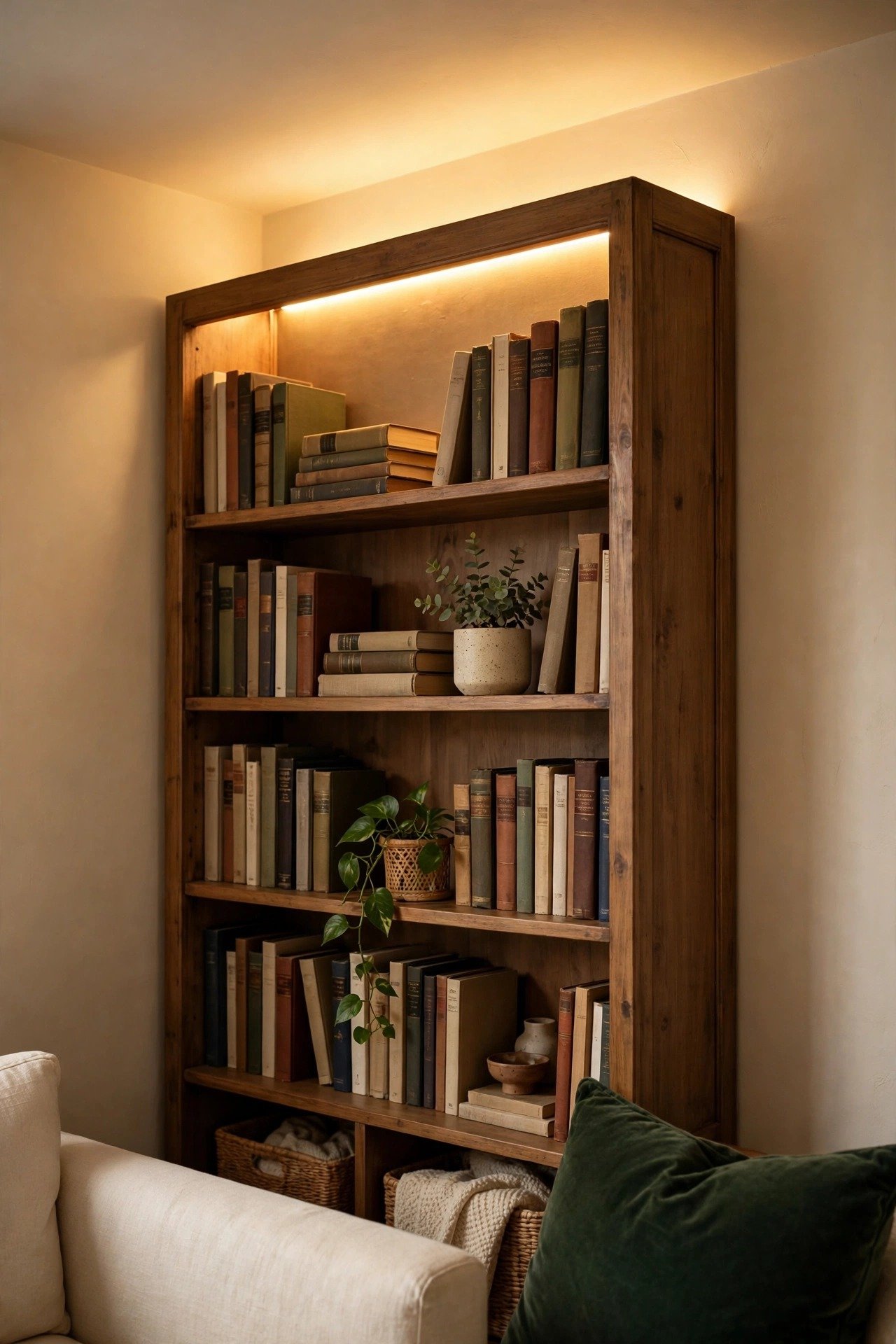
3. The LED Strip Along a Shelf
An LED strip along the top of a tall bookcase bounces light off the ceiling while the shelf hides the strip.
It adds ambient light without a new lamp on the floor. One warm strip is enough for a small room.
Stick it where the shelf meets the wall, out of sight, so the glow washes the ceiling.
Layer 2: Task Light — Light for Doing Things
Task light is the light you actually use: it sits where you sit, and it is brighter than the ambient layer.
4. The Reading Lamp Beside the Sofa
A reading lamp puts warm light beside the sofa — where you read, talk and relax.
A floor lamp with a fabric shade works well beside the sofa; an arc lamp can reach over the sofa arm.
Keep the lamp at about shoulder height when seated, so the light falls on your book, not in your eyes.

5. The Table Lamp on the Sideboard
A table lamp does the same job in a smaller footprint — and it is easier to move.
Put it on a sideboard, a console or a desk at the edge of the room — it lights the corner the ceiling light never reaches.
Choose a fabric or linen shade. It softens the light and spreads it sideways.

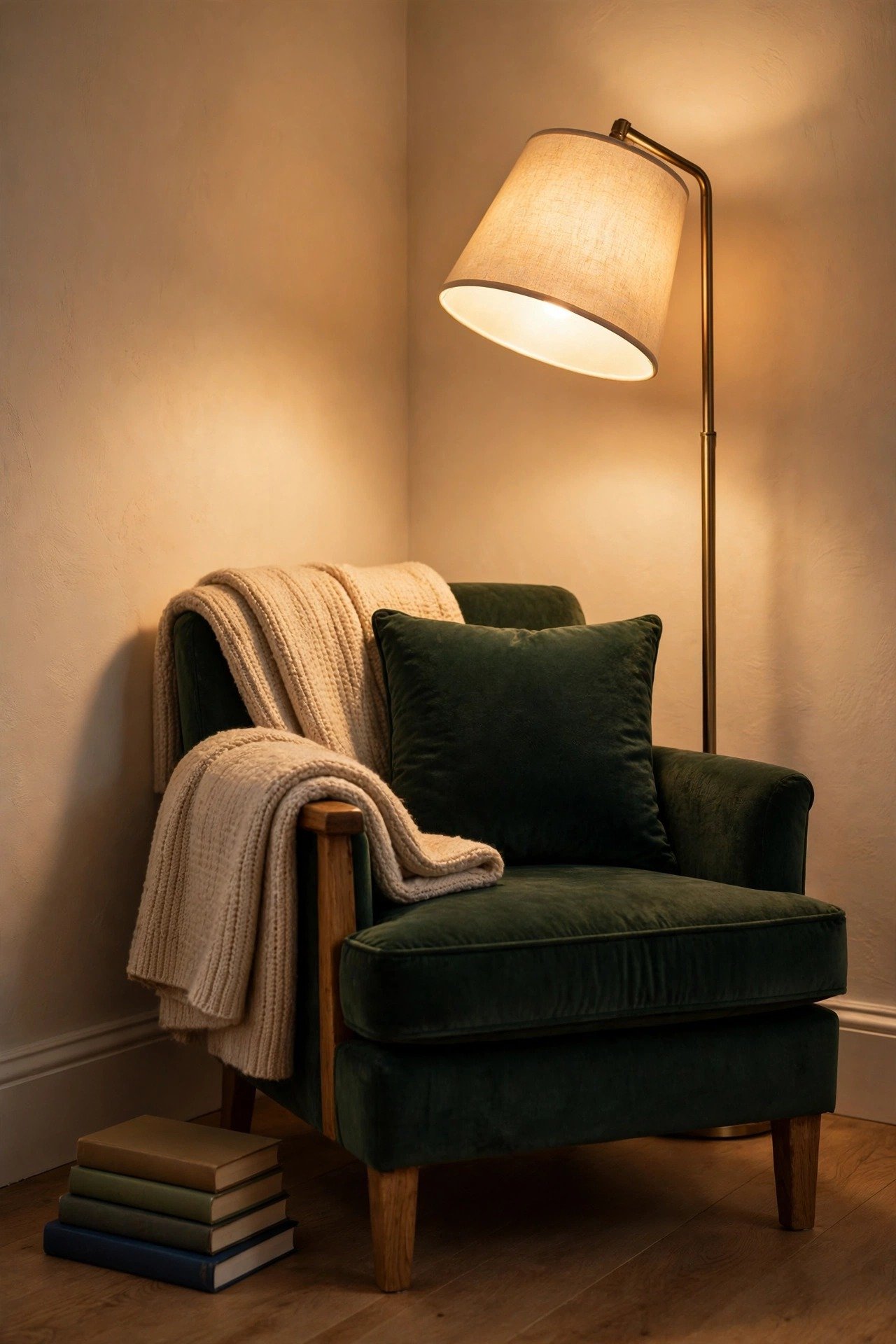
6. The Floor Lamp Behind the Reading Chair
An empty corner calls for a floor lamp: behind a reading chair, it becomes a dedicated reading spot.
Angle the shade toward the chair. Task light should fall where you need it.
One floor lamp per seating spot is enough.
Layer 3: Accent Light — The Finishing Glow
Accent light is the lowest, dimmest layer. It makes the biggest difference to how cozy a room feels.
7. The Plug-in Sconce on the Wall
A plug-in sconce hangs on a small hook or adhesive strip and plugs into a normal outlet. No wiring. No electrician.
It puts a pool of warm light on the wall at picture height. One sconce lifts a whole wall.
Place it where the room feels empty after dark — beside a mirror, above a console, beside a bookcase.

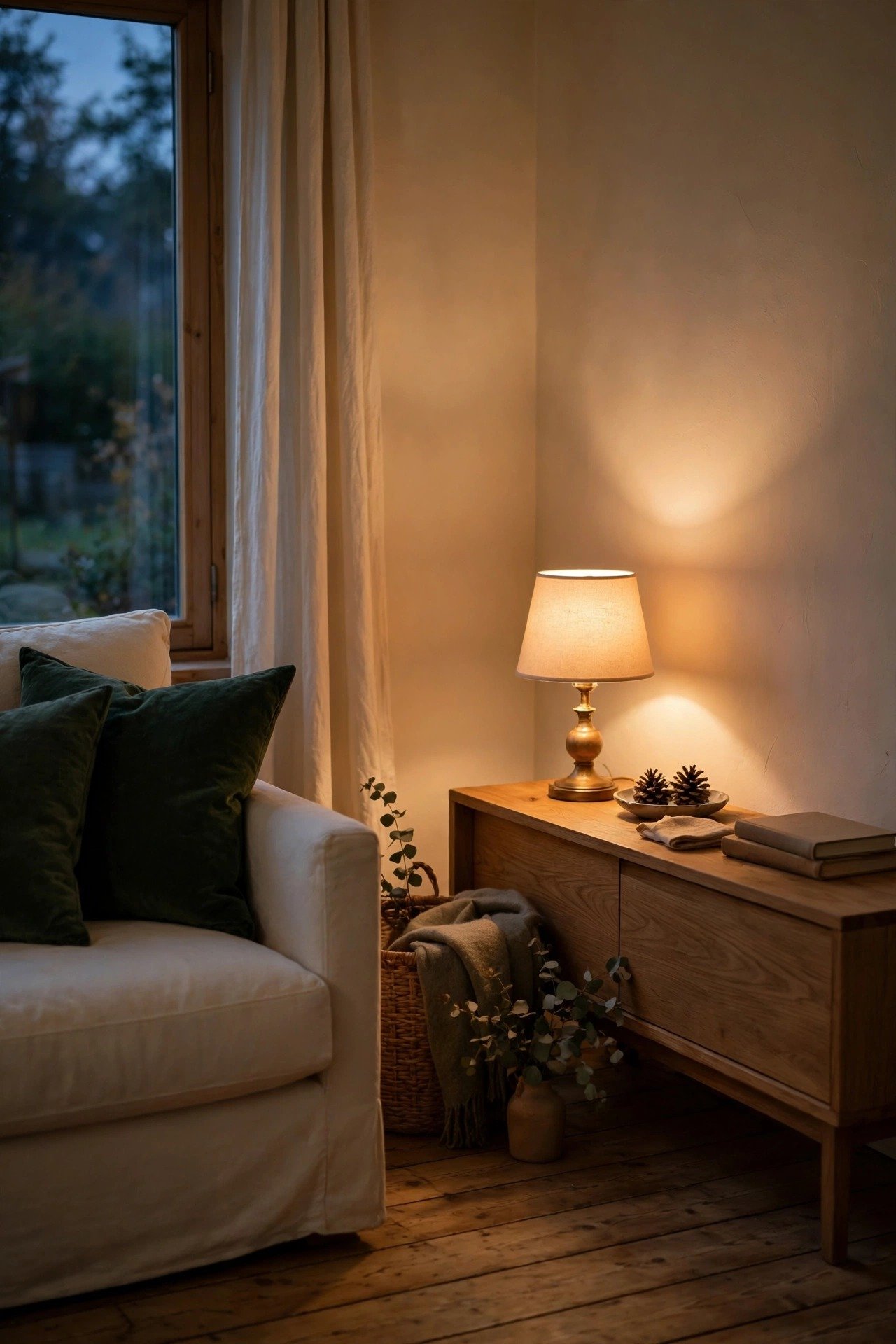
8. The Small Lamp on a Low Console
Low light fills the bottom of the room: a small lamp on a low sideboard, a console or a bookshelf.
It softens the shadows — without it, the bottom of the room stays dark.
Low light should be the dimmest layer in the room. Its job is atmosphere, not reading.
9. Fairy Lights and LED Candles as the Low Glow
Fairy lights add a lovely low glow, but they are not bright enough to be the main light.
Use them as a fourth touch, along a shelf or a window. On top of the three layers, not instead of them.
Flameless LED candles do the same job on a mantel or coffee table, flickering like real candles on a timer.

One Warm Color Everywhere: 2700K
Matching bulbs matter more than matching lamps. Bulbs are measured in Kelvin (K), and the number tells you the color of the light.
A 2700K bulb gives a warm, golden light, the color of a candle; a 5000K bulb gives a cold, blue-white light that feels like an office.
Use 2700K bulbs in every lamp: when all three layers share the same warm color, the light blends into one soft glow.
When they do not match, the room feels uneven. Check the packaging for the words “warm white.”
Two Worked Examples
Here is the same plan in two rooms — same layers, different starting point.
With a ceiling light. Start with the ceiling fixture on a dimmer as the ambient layer, a reading lamp beside the sofa for task light, and a plug-in sconce and a low lamp for accent. Three layers, three controls, one warm color.
Without a ceiling light. Start with a torchiere bouncing light off the ceiling as the ambient layer, a floor lamp at seating height, and a small low lamp for the glow. The full step-by-step plan for this room is in our companion post, How to Light a Living Room With No Overhead Lighting.
Both rooms end up the same way: warm light at three heights, each layer on its own control.
3 Mistakes to Avoid
One harsh lamp. One bright bulb glares at the center and leaves darkness everywhere else. Three softer lights always beat one strong light.
Mixed color temperatures. A warm lamp on one side and a cool lamp on the other makes the room feel restless. Stick to 2700K.
Everything on one switch. If all your lamps switch on together, you cannot set a mood. Give each layer its own control — a dimmer, a smart plug, or a separate switch.
Frequently Asked Questions
How many lamps does a living room need?
Three to five — one or two per layer. Start with three and add a fourth only if one corner still feels dark.
What is the best color temperature for a living room?
2700K warm white, in every lamp. It is the color of candlelight, and it keeps all three layers blending into one glow.
Can I layer lighting in a rented home?
Yes — every layer here is plug-in. No wiring, no drilling. When you move out, every lamp unplugs and goes with you.
Do I need a dimmer for every lamp?
No — one dimmer on the ceiling light is enough to start, and smart plugs give the same control to floor and table lamps.
A living room does not need more lamps — it needs three layers, ambient, task and accent, at one warm color, each on its own control.
Start with the layer you are missing: check the room at night, adjust one layer, and check again.
Warmer on the first evening. And every evening after that.
Browse more lighting ideas — and see more living room ideas.


